Born of Fire,
Worn by Kings
Part I — The origin, history, and enduring power of the ruby
There are gemstones that decorate — and then there are gemstones that define. The ruby belongs to the latter. Burning with a deep crimson fire, it is not merely worn. It is felt. It carries within it the pulse of passion, the weight of history, and the unmistakable aura of power.
The Origin of Ruby: Nature’s Perfect Fire
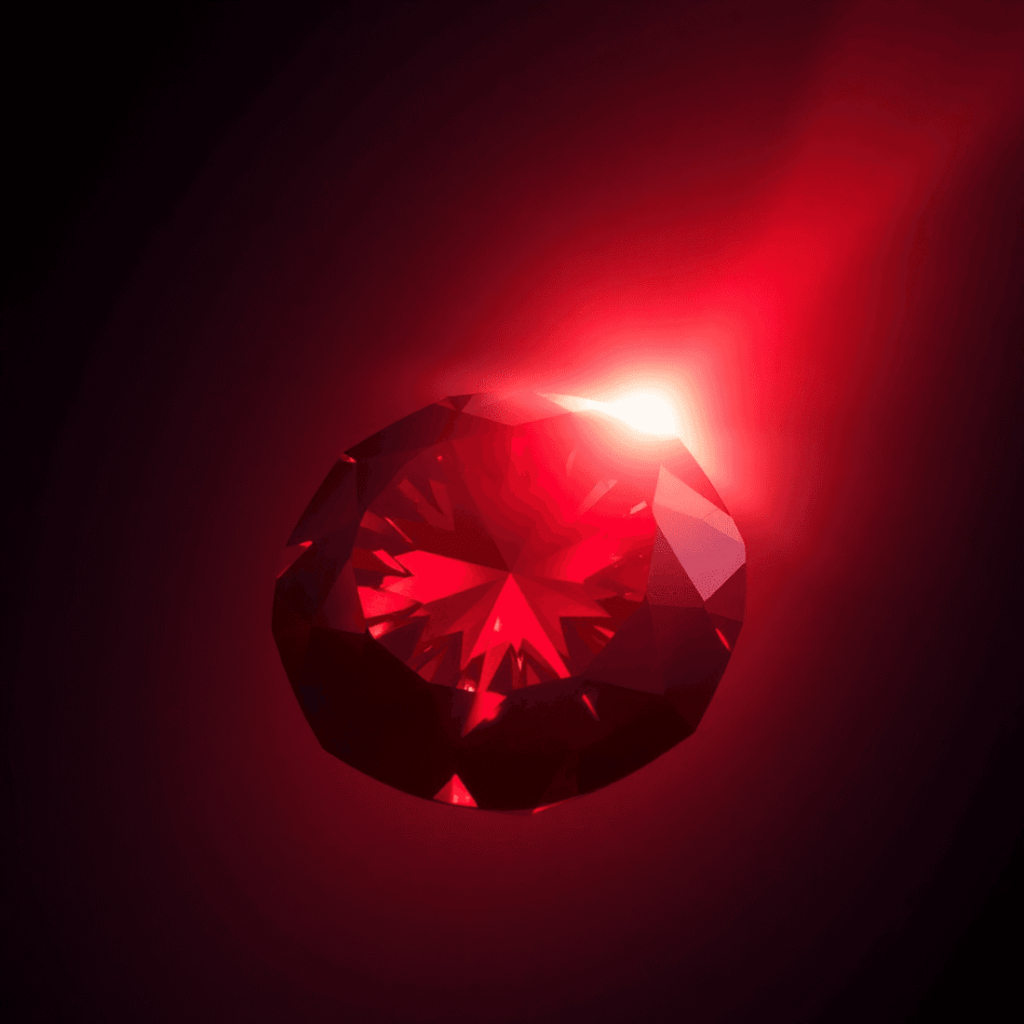
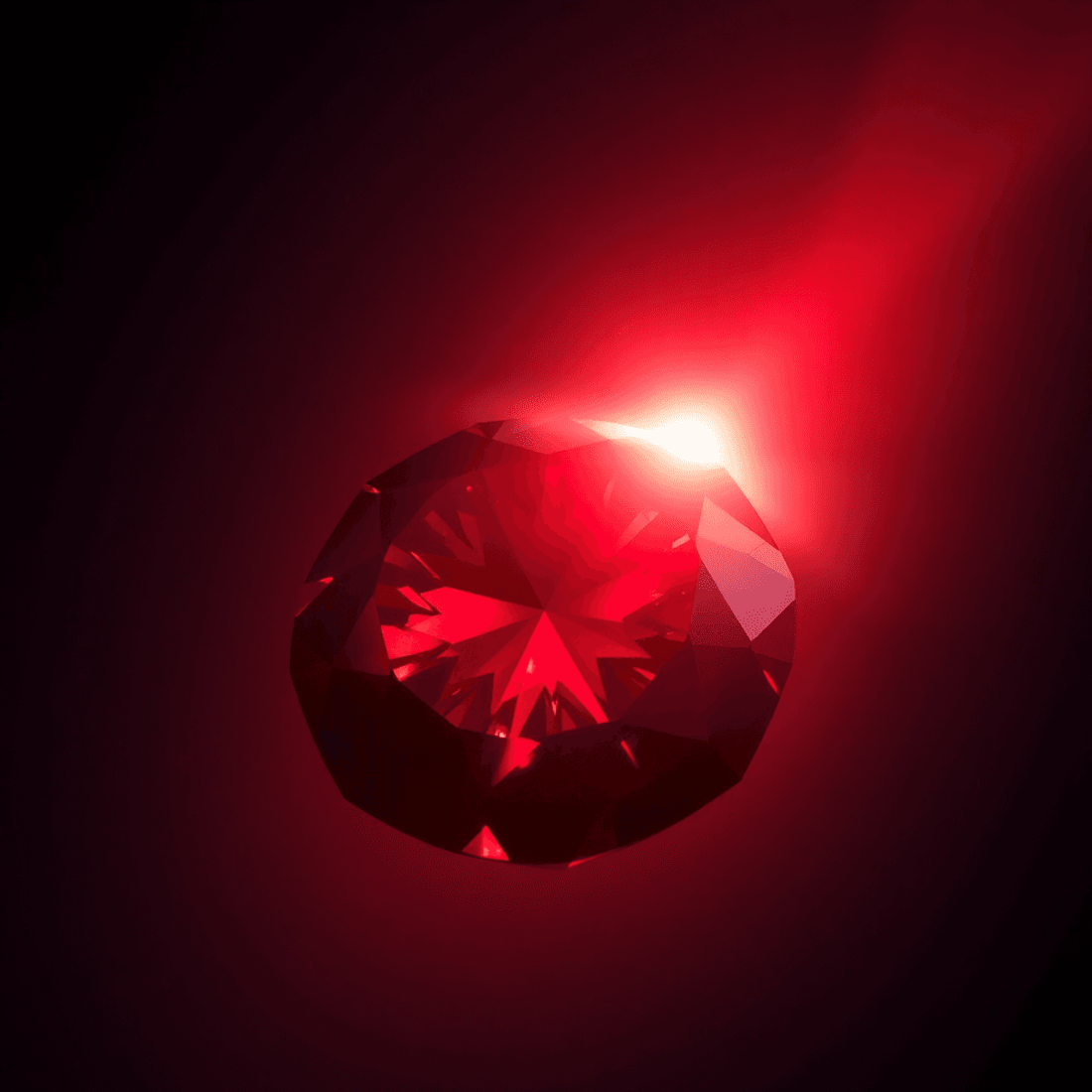
Ruby is a variety of corundum — one of the hardest minerals on earth, second only to diamond. Its signature red hue is created by traces of chromium within the crystal lattice, a geological accident so precise that it produces a colour found nowhere else in the natural world.
The finest rubies exhibit what gemologists call pigeon blood red — a rich, vivid crimson with a soft inner luminosity that seems to pulse in low light. These stones are extraordinarily rare, which is why they command prices that regularly surpass even the finest diamonds of equivalent weight.
Unlike diamonds, rubies are not defined by perfection alone. Their internal inclusions — referred to as silk, for the way they catch light — can enhance a stone’s beauty by diffusing its glow, creating depth rather than diminishing it. In ruby, character and quality are not opposites.
In a world of fleeting trends, ruby remains eternal — not because it refuses to change, but because what it represents never does.
Ruby Through History: A Gem of Kings
Long before modern luxury existed, ruby was already a symbol of supreme power. In ancient India, it was known as the Ratnaraj — the King of Gems. Warriors believed it made them invincible. Rulers wore it as a mark of divine protection. The stone was not simply prized; it was venerated.
Burmese soldiers went so far as to embed rubies into their skin before battle, convinced the stone would shield them from harm. Across Europe, royal courts prized rubies above all other gemstones, associating them with wealth, dominance, and unbreakable authority. To own a ruby was not just to own beauty — it was to possess a legacy.
Myanmar (Burma)
The historical benchmark for rubies worldwide. Burmese stones display the canonical pigeon blood red with an intensity and saturation that remains the reference point for all serious collectors.
Mozambique
The modern world’s most significant source. Mozambican rubies offer vibrant colour and exceptional clarity, often rivalling Burmese stones — and increasingly sought after by discerning buyers.
Sri Lanka
Known for lighter, pinkish-red hues with exceptional brilliance. Sri Lankan rubies are celebrated for their luminosity — stones that carry warmth rather than intensity.
Thailand
Deep, iron-rich tones with strong durability. Thai rubies are darker and more subdued, favoured by those who prefer a stone that speaks quietly but carries considerable weight.
Each origin tells a different story — different geological pressures, different mineral compositions, different centuries of formation. Yet all share the same essential truth: a fire that no other gemstone quite replicates.
Understanding Ruby Quality
- Colour The single most important factor. The ideal ruby displays a vivid, deeply saturated red with a faint blue undertone — neither too dark to appear opaque, nor too pale to lose its fire.
- Clarity Unlike diamonds, some inclusions are expected and accepted in fine rubies. What matters is that inclusions do not interrupt the stone’s glow. Fewer visible inclusions increase value significantly.
- Cut A well-executed cut determines how light moves through the stone. In ruby, the goal is not maximum sparkle but maximum warmth — an inner fire that deepens rather than scatters.
- Carat Weight Large, high-quality rubies are among the rarest objects in the natural world. Value escalates exponentially with size: a three-carat pigeon blood ruby can command more per carat than a comparable diamond.
The CAROB Perspective
Our Chettiar heritage was built on an intimate understanding of precious things — not as objects of display, but as vessels of meaning. The merchants and matriarchs who shaped that tradition did not choose jewels for spectacle. They chose them because they understood that the right stone, worn by the right person, becomes part of who they are.
Ruby has always occupied a particular place in that philosophy. It is not a gentle stone. It does not flatter — it confirms. When we design with ruby at CAROB, we are not simply working with colour. We are working with an intention: to create pieces for those who do not need permission to take up space.
Luxury, in the tradition we carry forward, is not about excess. It is about rightness — the quiet conviction that a piece was made for precisely this person, and no other.
A ruby does not whisper. It is the gemstone of those who live deeply, love fiercely, and carry a quiet, undeniable strength.
The Ruby Collection
Pieces conceived for those who choose meaning over convention — and presence over performance.
Explore the CollectionThe Precious You Deserve. — CAROB